Why Muslim Dating Apps Have Their Own Vocabulary
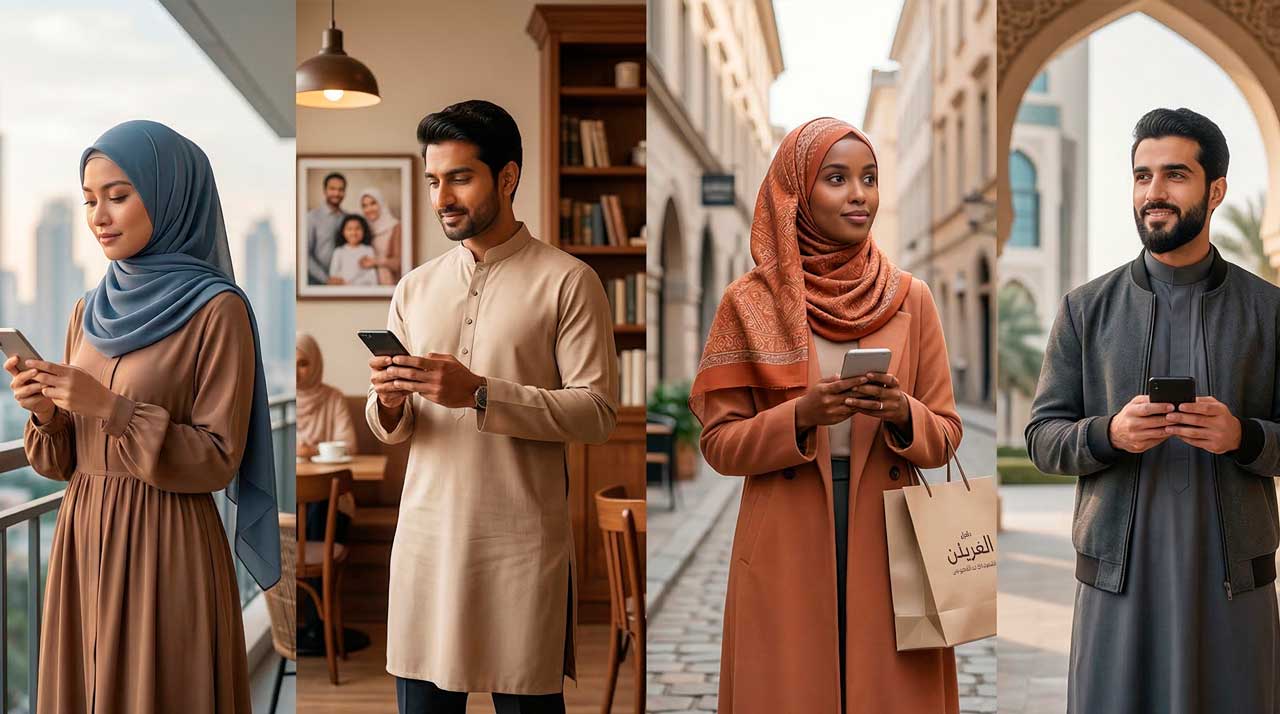
Muslim dating occupies a unique space in the digital world. It is neither the casual swiping culture of Tinder nor the purely transactional matchmaking of older matrimonial websites. It sits at the intersection of Islamic jurisprudence, modern technology, and the lived reality of Muslim singles in the West — in cities like London, New York, Toronto, and Sydney — who are trying to complete half their deen while navigating a secular world. This intersection has produced a rich, hybrid vocabulary. Some terms come directly from Arabic and Islamic tradition: nikah (the Islamic marriage contract), ta’aruf (the process of getting to know a potential spouse), wali (the male guardian whose presence is required in Islamic marriage), and naseeb (destiny or fate, often invoked when a match doesn’t work out). Others are borrowed from mainstream dating app culture — “swipe right,” “instant match,” “premium upgrade” — and adapted to fit the values and boundaries of halal dating. Still others are entirely new inventions: “biodata,” “faith level,” “chaperone mode,” and “marriage intentions” are terms that exist almost exclusively in the world of Muslim matrimony apps. Understanding this vocabulary is not a trivial matter. It shapes how you present yourself, how you interpret others’ profiles, and how you engage in conversations that are meant to lead — with sincerity and patience — toward nikah.The Major Muslim Dating Platforms: A Quick Orientation
Before diving into terminology, it helps to know the landscape. The Muslim dating app market has grown significantly over the past decade, and each platform has its own culture, user base, and feature set.| Platform | Founded | Key Audience | Unique Feature |
|---|---|---|---|
| Muzz (formerly Muzmatch) | 2015 | Global, 18–35 | Chaperone Mode, video profiles |
| Salams | 2017 | North America, UK | Community events, Islamic blog |
| Muslima | 2006 | Global, 25–45 | Cupid Media network, international reach |
| Single Muslim | 2000 | UK-based | One of the oldest platforms |
| Pure Matrimony | 2012 | Practicing Muslims | Strict halal focus, no photos initially |
| Half Your Deen | 2011 | North America | Name references the hadith on marriage |
| Sunnah Match | 2013 | Sunni Muslims | Emphasis on Sunnah-compliant matching |
| NikahPlus | 2020s | Global | AI guidance, full wali system, education |
| Helahel | 2013 | UK, global | Free messaging, no subscription required |
| IslamicMarriage.com | 2000s | Global | Part of World Singles Networks |
Section 1: Islamic Terms You Must Know Before You Start
These are the foundational concepts from Islamic tradition that underpin the entire philosophy of Muslim dating apps. You will see them referenced constantly — in app descriptions, in profile prompts, and in conversations with potential matches.Nikah
Nikah is the Arabic word for the Islamic marriage contract. It is the formal, legally binding union between a Muslim man and woman, conducted in the presence of witnesses and a wali. On Muslim matrimony apps, “seeking nikah” or “ready for nikah” signals that a user is not interested in casual relationships — they are actively looking for a spouse. This phrase functions as a powerful filter: it communicates serious intent and invites only equally serious responses.Ta’aruf
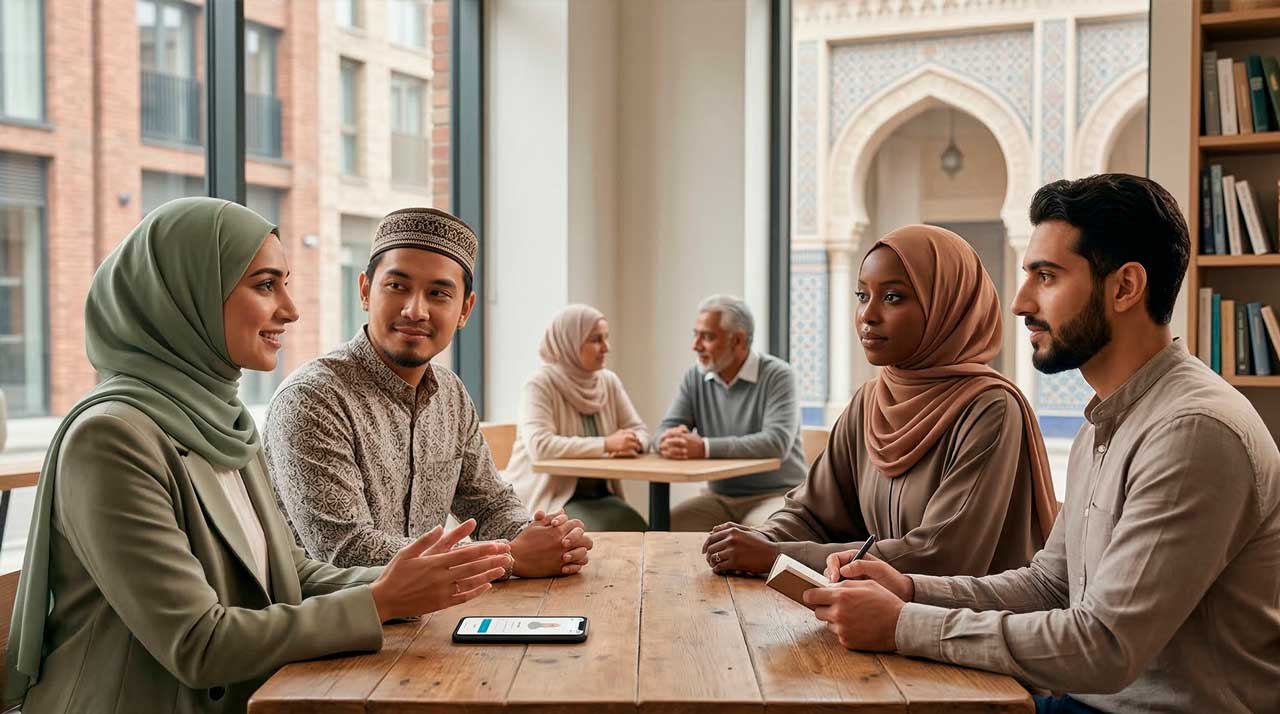
Ta’aruf literally means “getting to know one another” in Arabic. In the context of Muslim dating, it refers to the structured, chaperoned process of learning about a potential spouse with the explicit intention of marriage. Ta’aruf is distinct from Western dating in that it is purposeful from the start: both parties know they are evaluating each other as potential life partners, not simply enjoying each other’s company. Many Muslim dating apps are designed around the ta’aruf model, with features that encourage purposeful, boundary-respecting communication.Wali
The wali is a male guardian — typically a father, brother, or uncle — whose involvement is required in Islamic marriage. On Muslim dating apps, the wali concept has been digitized in innovative ways. Muzz’s “Chaperone Mode,” for example, allows a wali to receive weekly transcripts of a user’s conversations. NikahPlus goes further, offering a full wali system where the guardian can actively review and approve messages. For many Muslim women, the ability to involve a wali is not a restriction but a source of security and confidence.Naseeb
Naseeb means destiny or fate in Arabic. In the context of Muslim dating, it is frequently invoked to describe the belief that one’s spouse has been written for them by Allah. You will see it in profile bios (“trusting in my naseeb”), in conversation (“inshAllah it’s naseeb”), and even in app names (Salams, which means “peace,” carries a similar spiritual resonance). Understanding naseeb helps explain the patience and equanimity that many Muslim singles bring to the search for a spouse — and the lack of desperation that makes Muslim matrimony apps feel different from mainstream dating culture.Deen
Deen is the Arabic word for religion or way of life. On Muslim dating apps, “deen” is used as a shorthand for religious commitment and practice. “Values deen” or “deen-focused” in a profile signals that a user prioritizes Islamic practice in their daily life and seeks a partner who does the same. The phrase “completing half your deen” — drawn from a hadith of the Prophet Muhammad (peace be upon him) — is perhaps the most frequently used expression across all Muslim matrimony platforms, appearing in app taglines, profile bios, and marketing materials alike.Halal and Haram
Halal means permissible in Islam; haram means forbidden. In the context of Muslim dating, “halal dating” refers to a process of getting to know a potential spouse that respects Islamic boundaries — no physical contact before marriage, no private meetings without a chaperone, no sexually explicit conversation. The concept of halal dating is central to the marketing of virtually every Muslim dating app, and it shapes the features these platforms build: chaperone modes, conversation monitoring, and strict community guidelines all exist to support halal interaction.Adab
Adab means Islamic etiquette or good manners. On Muslim dating apps, adab governs how users communicate with each other. Sending unsolicited photos, using inappropriate language, or pressuring someone for a response all violate adab. Many platforms explicitly reference adab in their community guidelines, and users who violate it can be reported and removed.Section 2: Profile Terminology — How to Build a Profile That Works
Your profile is your first impression on any Muslim dating app. Understanding the terminology used in profile sections is essential to presenting yourself accurately and attractively.Biodata
Biodata is a term with roots in South Asian matrimonial culture that has been widely adopted across Muslim matrimony apps. It refers to a structured document or profile section that summarizes a person’s key details: name, age, location, education, occupation, family background, and religious practice. Unlike a Western dating profile, which tends to be casual and personality-driven, a biodata is more formal and comprehensive. On platforms like Muslima and Single Muslim, the biodata format is standard. On newer apps like Muzz and Salams, the same information is presented in a more modern, conversational format — but the underlying concept is the same.Faith Level
Faith level is a profile field that asks users to describe their level of Islamic practice. Common options include “very practicing,” “practicing,” “somewhat practicing,” and “not very practicing.” This field is one of the most important filters on any Muslim dating app, because compatibility in faith is considered foundational to a successful Islamic marriage. Being honest about your faith level is essential — misrepresenting yourself here leads to mismatched expectations and wasted time for both parties.Marriage Intentions
Marriage intentions is a profile field that asks users to indicate how soon they are looking to get married. Options typically range from “as soon as possible” to “within a year,” “within two years,” or “not sure yet.” This field serves as a critical filter for serious marriage-minded users who don’t want to invest time in someone who isn’t ready to commit. On most Muslim matrimony apps, users who indicate they are looking for marriage “as soon as possible” receive more messages and matches than those who express uncertainty.Looking For Section
The “looking for” section is where users describe the qualities they seek in a spouse. This is distinct from the “about me” section, which describes the user themselves. A well-written “looking for” section is specific without being rigid — it communicates genuine preferences (faith level, lifestyle, family values) without creating an impossibly narrow checklist. The most effective “looking for” sections on Muslim dating apps focus on character, values, and compatibility rather than physical appearance.About Me Section / Profile Bio
The “about me” section or profile bio is the free-text area where users introduce themselves in their own words. On Muslim dating apps, the best profile bios strike a balance between Islamic values and personal personality. They typically mention faith practice, family values, career or education, hobbies, and what the user is looking for in a partner — all within a few hundred words. The phrase “Assalamu Alaikum” (peace be upon you) as an opening is common and signals Islamic identity and warmth.Profile Photo
Profile photos on Muslim dating apps are handled differently than on mainstream platforms. Many Muslim women choose to wear hijab in their photos, which is both a personal expression of faith and a signal to potential matches. Some platforms allow users to keep their photos private and share them only with matches they trust — a feature that respects Islamic modesty norms. On platforms like Pure Matrimony, photos are initially hidden and only revealed after mutual interest is expressed.Lifestyle Preferences
Lifestyle preferences is a profile section that covers practical compatibility factors: whether the user drinks alcohol (the answer on a Muslim dating app is almost universally no), whether they smoke, their dietary habits (halal food only, vegetarian, etc.), their views on living arrangements after marriage, and their expectations around gender roles. These details help filter for genuine compatibility beyond religious practice.Section 3: App Features and Actions — What Everything Does
This is where many new users get confused. Muslim dating apps have developed a set of features that are either unique to the Muslim context or adapted from mainstream apps. Here is what each one means and how to use it effectively.Swipe Right / Express Interest / Like Profile
These terms all refer to the same basic action: indicating that you are interested in a potential match. On Muzz, you “like” a profile; on Salams, you “express interest”; on mainstream apps, you “swipe right.” The key difference on Muslim dating apps is what happens next: most platforms require mutual interest before a conversation can begin. This mutual-match model is designed to protect users — particularly Muslim women — from unwanted messages and to ensure that every conversation starts from a place of genuine mutual attraction.Instant Match
An instant match occurs when two users express interest in each other simultaneously, or when one user’s interest is immediately reciprocated. On some platforms, an instant match triggers a notification and unlocks the ability to start a conversation. The term carries a sense of excitement and serendipity — the digital equivalent of two people catching each other’s eye across a room.Chaperone Mode / Wali Feature
Chaperone Mode is one of the most distinctively Islamic features in the Muslim dating app ecosystem. Pioneered by Muzz, it allows a user to designate a trusted person — a parent, sibling, or imam — to receive regular transcripts of their conversations. This digital chaperone fulfills the Islamic requirement that unmarried men and women not be alone together (in this case, in private digital conversation) without oversight. NikahPlus takes this concept further with a full wali system that allows guardians to actively participate in the matching process, not just observe it.Get Verified / Selfie Verification
Verification on Muslim dating apps typically involves confirming that a user’s profile photo matches their actual appearance. This is done through selfie verification — the app asks you to take a selfie in a specific pose and compares it to your profile photo using AI. Verified profiles are marked with a badge, signaling to other users that the person is genuine. On platforms like Muzz, verification also includes phone number verification. NikahPlus offers multi-channel verification through SMS, Telegram, and WhatsApp.Upgrade to Premium / Muzz Gold / Premium Subscription
Most Muslim dating apps operate on a freemium model: basic features are free, but advanced features require a paid subscription. Muzz Gold, for example, unlocks unlimited likes, read receipts, the ability to see who liked your profile, and advanced search filters. On NikahPlus, a coin-based system allows users to purchase specific features — like sending gifts or boosting their profile — without committing to a full subscription. Understanding what premium features offer helps you decide whether the investment is worthwhile for your search.Start Conversation / Send a Message
On most Muslim dating apps, you can only start a conversation after a mutual match has been established. The opening message is critically important — it sets the tone for the entire interaction. On Muslim dating apps, the most effective opening messages are respectful, specific (referencing something from the other person’s profile), and clear about intentions. A simple “Assalamu Alaikum, I read your profile and I’d love to learn more about you” is far more effective than a generic “Hi” or a list of questions.View Profile / Profile Visit
Viewing a profile on most Muslim dating apps is a passive action — you can browse without the other person knowing. However, some platforms notify users when someone has viewed their profile, which can serve as a soft signal of interest. On NikahPlus, users can choose to hide their profile visits in incognito mode, giving them the freedom to explore without creating unwanted pressure.Gift System
The gift system is a feature unique to some Muslim dating apps, including NikahPlus. It allows users to send virtual gifts — flowers, books, stars — to express interest or appreciation. This feature is designed to provide a halal way of showing affection that doesn’t involve physical contact or inappropriate language. Receiving a gift is often a conversation starter and a signal of genuine interest.Search Filters / Advanced Search
Search filters allow users to narrow their pool of potential matches based on specific criteria. On Muslim dating apps, these filters typically include age range, location, height, education level, occupation, ethnicity, faith level, marriage intentions, Islamic school of thought (Sunni, Shia, etc.), and lifestyle preferences. Using filters strategically is one of the most effective ways to find genuinely compatible matches on any Muslim matrimony platform.Section 4: Conversation Etiquette — What to Say and How to Say It
Understanding the terminology of Muslim dating apps extends beyond features and profile fields. It also includes the unwritten rules of conversation — the etiquette that governs how Muslim singles communicate with each other in a way that is respectful, purposeful, and halal.Opening with Salaam
The standard opening on any Muslim dating app is “Assalamu Alaikum” (peace be upon you) or the abbreviated “Salaam.” This Islamic greeting immediately establishes shared identity and sets a respectful tone. It is the digital equivalent of a handshake — a signal that you are approaching this interaction with good intentions and Islamic manners.Stating Your Intentions Early
One of the most important norms in Muslim dating app culture is stating your intentions clearly and early. Unlike mainstream dating culture, where it can feel presumptuous to mention marriage in early conversations, on Muslim matrimony apps it is expected. Saying something like “I’m looking for a serious relationship leading to marriage” or “I’m ready for nikah when I find the right person” is not forward — it is honest and respectful of the other person’s time.Asking About Faith and Practice
Questions about deen — how often someone prays, whether they fast during Ramadan, how they practice their faith in daily life — are entirely normal and expected on Muslim dating apps. These are not intrusive questions; they are fundamental compatibility checks. The most productive early conversations on Muslim matrimony platforms typically cover faith practice, family values, life goals, and views on marriage before moving into more personal territory.The Role of Patience (Sabr)
Sabr — patience — is a virtue that is frequently invoked in Muslim dating app culture. Finding a spouse is understood as a process that unfolds according to Allah’s plan, not according to a user’s timeline. This means that ghosting, slow responses, and long gaps between messages are common and generally accepted. The expectation of instant gratification that characterizes mainstream dating culture is largely absent from Muslim dating apps, and users who approach the process with patience tend to have better experiences.Section 5: Red Flags and Green Flags — Reading Profiles Like a Pro
With a firm grasp of Muslim dating app terminology, you are now equipped to read profiles critically and identify both promising matches and potential problems. Green flags in a profile include:- a completed biodata with specific, thoughtful answers;
- a clear statement of marriage intentions;
- honest representation of faith level;
- photos that are modest and genuine;
- a “looking for” section that describes character and values rather than physical appearance;
- and the use of Islamic phrases like “inshAllah,” “Alhamdulillah,” and “Bismillah” in a natural, non-performative way.
- profiles with no photo or very few details;
- vague or evasive answers about marriage timeline;
- inconsistency between stated faith level and described lifestyle;
- pressure to move off the app to private messaging very quickly;
- requests for financial information or help;
- and profiles that focus heavily on physical appearance while saying little about values or faith.
Section 6: A Platform-by-Platform Terminology Guide
While the core vocabulary is shared, each major Muslim dating app has developed its own terminology and features. Here is a quick reference guide.| Term | Platform | Meaning |
|---|---|---|
| Chaperone Mode | Muzz | Allows a wali to receive chat transcripts |
| Muzz Gold | Muzz | Premium subscription tier |
| Salams | Salams App | The app’s name; also means “peace” |
| Express Interest | Salams | Equivalent of “liking” a profile |
| Biodata | Muslima, Single Muslim | Structured profile document |
| Wali System | NikahPlus | Full guardian participation in matching |
| AI Guidance | NikahPlus | AI assistant for marriage readiness |
| School Section | NikahPlus | Educational content on Islamic marriage |
| Gift System | NikahPlus | Virtual gifts to express interest |
| Faith Level | Most platforms | Self-reported religiosity scale |
| Marriage Intentions | Most platforms | Timeline for seeking marriage |
| Instant Match | Most platforms | Simultaneous mutual interest |
| Selfie Verification | Muzz, NikahPlus | Photo identity confirmation |
Conclusion: The Language of Halal Love
The vocabulary of Muslim dating apps is not just a collection of technical terms — it is a reflection of the values, beliefs, and aspirations of millions of Muslim singles around the world who are trying to find love in a way that honors their faith. Understanding this language is the foundation of using these platforms effectively. When you know what ta’aruf means, you approach conversations with the right mindset. When you understand the wali system, you can involve your family in a way that feels natural rather than awkward. When you know how to write a compelling biodata and a sincere profile bio, you attract matches who are genuinely compatible with you. And when you understand the etiquette of Muslim dating apps — the importance of stating intentions, the role of sabr, the significance of adab — you become the kind of user that others are genuinely excited to match with. The search for a spouse is one of the most significant journeys of a Muslim’s life. May Allah make it easy for you, and may your naseeb find you soon. Inshallah.Frequently Asked Questions
A biodata is a structured profile document used in South Asian and Muslim matrimonial culture. It typically includes personal details (name, age, location), educational and professional background, family information, and religious practice. On Muslim dating apps, the biodata concept is incorporated into profile fields that ask for similar information in a digital format.
A good Muslim dating profile includes: a clear, honest statement of your faith level and marriage intentions; a genuine profile bio that reflects your personality and values; specific answers in the "looking for" section that describe character rather than physical appearance; and a verified, modest profile photo. Avoid vague answers, unrealistic expectations, and anything that misrepresents your actual lifestyle or practice.
The permissibility of Muslim dating apps is a matter of ongoing scholarly discussion. Most contemporary Islamic scholars consider it permissible to use Muslim matrimony apps as a tool for finding a spouse, provided that the interaction remains within Islamic boundaries — no physical contact, no private meetings without a chaperone, and a clear intention of marriage. Features like chaperone mode and wali systems are specifically designed to support halal use of these platforms.
References:
- Muzz Blog. “Muslim Dating Rules: What You Need to Know Before You Start Dating.”
- Salams Blog. “8 Muslim Dating Rules and Traditions You Need to Know.”
- Reddit r/MuslimMarriage. “An Experiential Guide to Online Muslim Matchmaking Apps.”
- Pew Research Center. “Muslim Americans: No Signs of Growth in Alienation or Support for Extremism.”
- IslamicMarriage.com. “Muslim Marriage & Muslim Dating Site.”