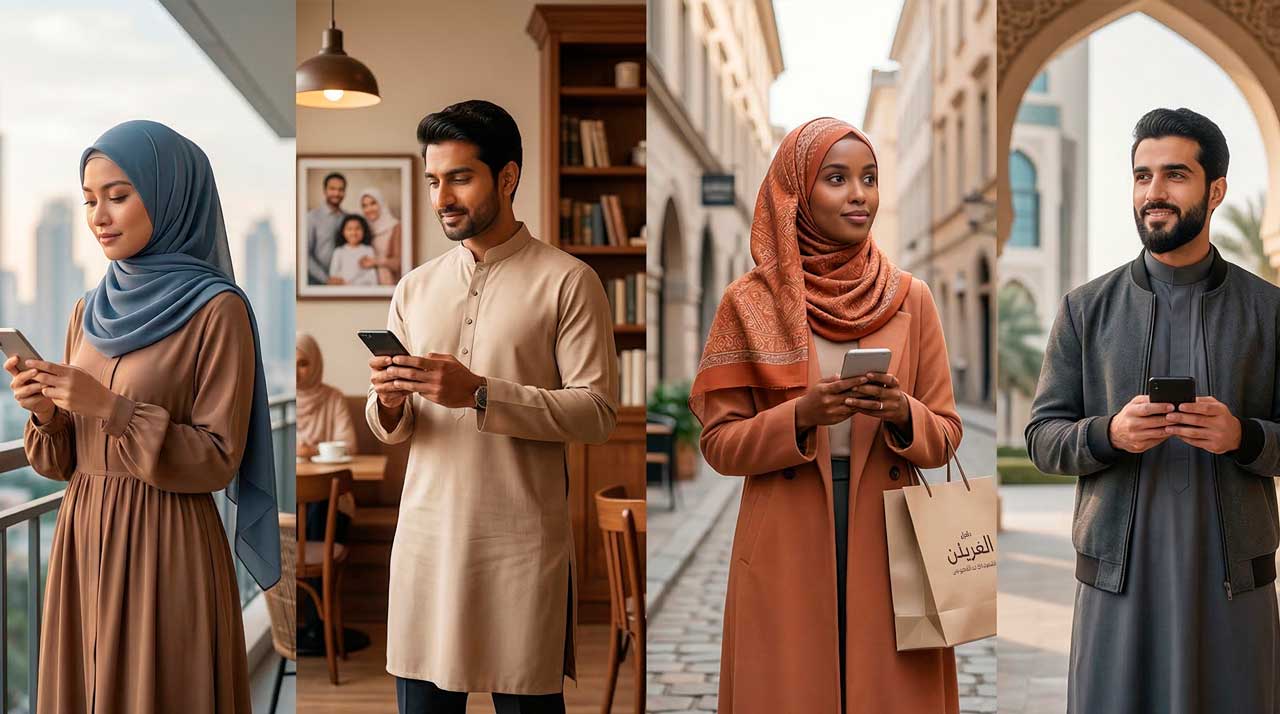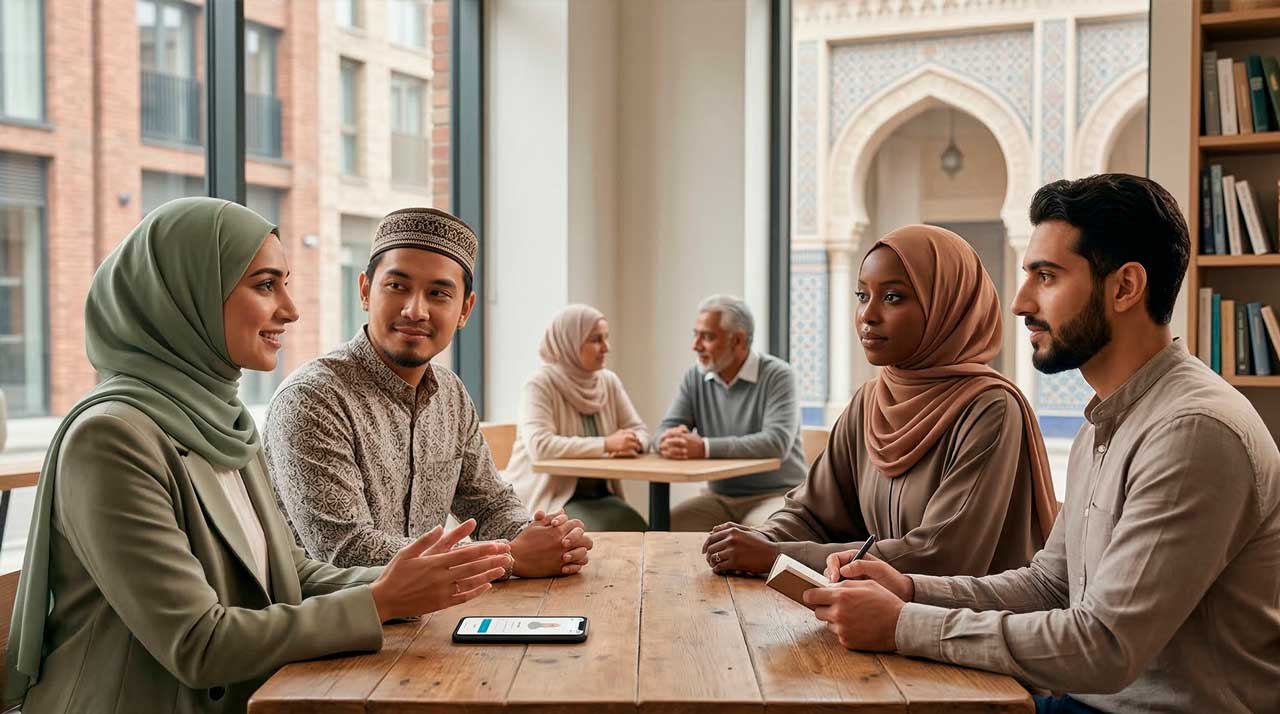
Every day, more than 500 Muslim couples find each other through marriage apps. Over 600,000 success stories have been documented on Muzz alone, and Salams reports a similar number. Yet for every couple celebrating their nikah, thousands of singles are still swiping, wondering whether their naseeb is truly just a few taps away. This article brings together real success stories, the patterns behind them, and the practical wisdom that separates those who find their spouse online from those who give up too soon.
The Rise of Muslim Marriage Apps: A New Path to Naseeb
Not long ago, the idea of finding a Muslim spouse through a smartphone app would have raised eyebrows at the mosque. Today, it is one of the most common ways Muslim singles across the world begin the journey toward marriage. Platforms like Muzz, Salams, NikahPlus and Muzmatch have collectively facilitated hundreds of thousands of marriages, and the numbers continue to grow. Muzz alone attracted 1.3 million new users globally in 2023 and 3.5 million more in 2024, reflecting a profound cultural shift in how Muslims approach the search for a life partner.[1]
The reasons for this shift are both practical and structural. In many Western countries, the mosque — historically the centre of Muslim community life — has not kept pace with the needs of young singles. Research from the Institute for Social Policy and Understanding found that less than 30 percent of adult mosque attendees in the United States are between the ages of 18 and 34, even though that age group makes up 54 percent of the adult Muslim population.[2] For diaspora Muslims especially, the traditional “aunty network” of family introductions has become unreliable or non-existent. The pandemic accelerated this further, cutting off in-person social opportunities at precisely the moment when many young Muslims were ready to marry.
Into this gap stepped a new generation of Muslim marriage apps, carefully distinguished from mainstream dating platforms by their emphasis on marriage intention, Islamic values, and features like wali (guardian) modes and prayer frequency indicators. The semantic distinction matters enormously to users: many who would never describe themselves as “dating” are entirely comfortable using a “Muslim matrimonial app.” As one academic researcher noted, the word “dating” carries such stigma in Muslim communities that recruiting participants for research required reframing the language entirely — from “Muslim dating apps” to “Muslim matchmaking.”[3]
What has emerged is a thriving ecosystem of platforms serving Muslim singles across every demographic, geography, and level of religious observance. And within that ecosystem, genuine love stories are being written every single day.
Real Stories, Real Couples: How They Found Each Other Online
The most powerful evidence that Muslim marriage apps work is not a statistic — it is the stories of real people who met, fell in love within halal boundaries, and built lives together. The following accounts are drawn from community testimonials, published interviews, and verified user experiences. Each story carries a lesson that goes beyond inspiration.
“I Adjusted My Criteria and Found Him in Six Months”
After more than two years on Muzz, one woman was ready to give up entirely. She had downloaded the app, deleted it, downloaded it again, and repeated the cycle multiple times. The men she encountered seemed to be swiping based on photos alone, never initiating conversations after matching, or showing little genuine interest in who she was beyond surface-level attributes. The experience left her questioning whether the platform could ever work for someone like her.
The turning point came after a particularly disappointing interaction. She had been in contact with someone who, on paper, seemed like a reasonable match — but the connection felt hollow, and she recognised that she had been compromising on things that actually mattered to her. She deleted the app again, but this time she used the break differently. Rather than simply waiting, she spent time reflecting on what a genuinely healthy relationship looked like, what qualities she actually needed in a partner, and where her previous criteria had been either too vague or too focused on the wrong things.
When she re-downloaded Muzz with this clarity, the experience was entirely different. She was more decisive about who she engaged with, more honest in her own profile, and more willing to pass on profiles that did not align with her values — even when the photos were appealing. Within six months, she had met the man who would become her husband.
“With Allah’s Mercy, I met my husband within six months, Alhamdulilah. Had I not changed course, I’d probably still be swiping — or worse, ended up with the wrong person.”
The lesson here is not simply “be patient.” It is that the quality of your search is directly related to the clarity of what you are searching for. Knowing deeply what a healthy relationship looks like, and being able to recognise who is capable of building one with you, is the single most important skill a Muslim marriage app user can develop.
“Distance Was Not a Barrier — It Was a Blessing in Disguise”
When Hussain and Aliya matched on a Muslim matrimonial NikahPlus website, they faced an immediate obstacle: he was not in the country, and the pandemic had made travel impossible. For many people, this would have been the end of the conversation. For them, it became the foundation of something extraordinary.
Unable to meet in person for the first six months of their acquaintance, they were forced to build their connection entirely through phone calls, video chats, and messages. What emerged from those conversations was a relationship grounded in character, values, and genuine intellectual compatibility. Both were engaged in spiritual reading at the time, and their discussions ranged from Islamic texts to personal histories to hopes for the future. By the time they finally met for coffee at a halfway point between their cities, it felt as though they had known each other for years.
“It felt very natural, like we’d known each other for a long time, but simply hadn’t seen each other for so many years. It felt comfortable and very easy.”
Aliya had initially been put off by the profiles she encountered on Muslim matrimonial sites — too many men listing their degrees, salaries, and cars as though presenting a CV rather than introducing themselves as human beings. What drew her to Hussain’s profile was precisely what it lacked: there was no mention of credentials, no focus on material achievements. Instead, he had written simply about who he was — someone who travelled, read, enjoyed nature and walks — and what he was looking for: “someone to share this beautiful journey with.” Those words, she said, got her intrigued enough to send a connection request.
They met fewer than five times before deciding to marry. The distance that had seemed like a disadvantage had, in fact, given them something most couples never have: an extended period of getting to know each other’s character before their appearance, circumstances, or physical presence could cloud the picture.
“I Never Thought I’d Use an App — Now We’re Planning Our Walima”
Not everyone who finds success on Muslim marriage apps begins as a believer in the process. Many of the most compelling testimonials come from people who were deeply sceptical, who tried the apps reluctantly, and who were surprised — sometimes astonished — by what they found.
One such story comes from a woman who had spent months on multiple platforms, growing increasingly disillusioned with the quality of profiles she encountered. The men seemed either superficial or not serious about marriage. She was close to abandoning the search entirely when she stumbled across a profile that stopped her scrolling. Unlike the others, it contained no mention of a degree, a job title, or a salary. It did not list physical requirements for a potential partner. It simply described a person — his interests, his values, his approach to life — and expressed a desire to find someone to share it with.
She reached out. He responded. And what followed was a conversation that gradually revealed a depth of character she had not expected to find through an app. The profile had been honest, and the person behind it was honest too. Within eight months of their first message, they were engaged.
“Don’t let distance limit yourself. Keep an open mind. Don’t give up hope. Know what you’re looking for. Embrace your naseeb.”
This story illustrates a truth that appears again and again in Muslim marriage app success stories: the quality of a match is often determined not by the algorithm, but by the quality of the profiles on both sides. When someone presents themselves authentically — not as a list of achievements, but as a human being with values and a vision for their life — they attract authentic responses.
“Alhamdulillah, Married in 2025: Our Eight-Month Journey”
Not all success stories involve overcoming dramatic obstacles. Some are simply the result of two people doing everything right — being clear about their intentions, involving their families at the appropriate time, maintaining halal boundaries, and trusting the process.
One couple who married in 2025 described their journey as surprisingly smooth, given how many horror stories they had heard from friends. They matched on Salams, had a brief but substantive exchange of messages on the platform, and then moved to a more structured conversation that included discussion of family backgrounds, religious practice, and expectations for marriage. Within the first few weeks, both had mentioned that they would want to involve their families before things progressed further. This shared expectation removed a significant source of potential friction.
Their families met after approximately two months of conversation. The nikah took place six months after that. Looking back, they attributed their success not to luck, but to intentionality — both had come to the app knowing what they wanted, had been honest about it from the beginning, and had treated the process with the seriousness it deserved.
“By Allah’s will we were wed. Wouldn’t have been possible without community duas. Don’t compromise on core values.”
What Every Success Story Has in Common: Seven Factors That Actually Work
Across hundreds of testimonials, interviews, and community discussions, certain patterns emerge with striking consistency. The couples who find their spouse through Muslim marriage apps are not simply lucky — they approach the process differently from those who give up. Seven factors appear in virtually every success story.
Profiles that reveal character, not credentials. The profiles that attract serious, compatible matches are almost never the ones that lead with degrees, job titles, or physical requirements. They are the ones that show who a person actually is — their values, their interests, their sense of humour, their vision for a life together. A bio that reads like a CV repels the very people it should attract. A bio that reads like an honest introduction invites genuine connection.
Clarity about what you are actually looking for. Vague criteria produce vague matches. The most successful app users have done the internal work before they start swiping: they know their non-negotiables (religious practice, family values, life goals) and they know what they are willing to be flexible about (geography, age range, cultural background). This clarity makes every interaction more efficient and every decision easier.
Patience with the process, combined with willingness to reassess. Success on Muslim marriage apps rarely happens in the first few weeks. The average timeline from first match to marriage, based on community testimonials, is somewhere between six and eighteen months. This does not mean passively waiting — it means actively refining your approach, taking breaks when needed, and returning with fresh perspective rather than accumulated frustration.
Involving family at the right moment. One of the most consistent markers of a serious match is the willingness to discuss family involvement early. Couples who succeed tend to raise the topic of wali and family introduction within the first few weeks of conversation, not as a formality but as a genuine expression of how they intend to approach marriage. This shared expectation aligns both parties and filters out those who are not serious.
Maintaining halal boundaries throughout. The apps themselves provide tools for this — wali modes, chaperone features, the ability to blur photos. But the more important factor is intention. Couples who keep their conversations focused on the purpose of marriage, who avoid the drift toward casual interaction that can undermine the seriousness of the search, consistently report better outcomes.
Openness to distance and different backgrounds. Some of the most beautiful Muslim marriage app success stories involve couples from different countries, different cultural backgrounds, even different mother tongues. The couples who find each other across these distances share a willingness to prioritise character and values over geography and familiarity. As one user put it simply: “Don’t let distance limit yourself.”
Tawakkul — trusting in Allah’s timing. This is not passive resignation; it is the active combination of sincere effort and genuine trust. The couples who succeed are those who make dua, who put in the work, and who release the outcome. The desperation that comes from treating the app as a last resort, or from placing too much pressure on every interaction, is itself an obstacle. Embracing the concept of naseeb — the idea that what is written for you will reach you — creates the inner calm that makes genuine connection possible.
Choosing the Right Platform: A Practical Comparison
Not all Muslim marriage apps are created equal, and the right platform depends significantly on who you are and what you are looking for. The table below summarises the key characteristics of the major platforms currently available.
| Platform | Reported Success | Best Suited For | Standout Feature |
|---|---|---|---|
| Muzz | 600,000+ success stories; 500+ couples daily | Muslims globally, all backgrounds | Wali mode; detailed religiosity indicators |
| Salams | 660,000+ success stories | More religious individuals | Anonymous swiping; GPS + selfie verification |
| NikahPlus | 3,000+ marriages | CIS and Western Muslims | AI guidance, full wali system, education |
| Single Muslim | 10,000+ marriages | UK and US Muslims | Established since 2000; 2.5M+ users |
| Mawada | 26,000+ successful marriages | Arab-speaking Muslims | Strong presence in MENA region |
Muzz is currently the largest Muslim marriage app globally, with a presence in over 190 countries and a user base that spans virtually every Muslim demographic. Its wali mode — which allows a guardian to be added to conversations — makes it particularly suitable for users who want to maintain traditional Islamic protocols while using a modern platform. NikahPlus takes this concept further with a full wali system that allows guardians to actively participate in the matching process, not just observe it. Salams, formerly known as Minder, is particularly popular among more religiously observant users, offering anonymous swiping (profiles are only revealed upon mutual interest) and robust safety features including GPS verification and selfie authentication.
For those in the UK and Western Europe, Single Muslim has the advantage of longevity — it has been operating since 2000 and has facilitated more than 10,000 marriages. Its desktop version makes it accessible to users who prefer not to rely solely on a mobile app. Muzmatch, now rebranded as Muzz in many markets, is known for its equal gender distribution, which is a significant practical advantage given that many Muslim matrimonial platforms skew heavily male.
The honest answer to “which app should I use?” is: try two or three, invest in the one where you find the most compatible profiles, and commit to using it properly rather than treating it as a passive background activity.
Common Mistakes That Prevent Success (And How to Avoid Them)
For every success story, there are many more stories of frustration, wasted time, and eventual abandonment of the apps. Most of these failures share identifiable patterns — mistakes that are entirely avoidable once you know what to look for.
The most common mistake is treating a Muslim marriage app like a mainstream dating app: swiping based primarily on photos, engaging in casual conversation with no clear direction, and avoiding any discussion of marriage, family, or values until it feels “too serious.” This approach produces exactly the kind of shallow interactions that lead people to conclude the apps don’t work. They do work — but only when used with the intention and seriousness that marriage deserves.
A closely related mistake is the generic profile. Quoting a Quranic verse about marriage is not a substitute for telling people who you actually are. When every profile contains the same hadith about completing half your deen, none of them stand out. The profiles that attract genuine interest are specific, honest, and personal — they give a potential match something real to respond to.
Giving up too soon is perhaps the most heartbreaking mistake, because it often happens just before a breakthrough. Many of the most successful app users report that their match came after a period of reassessment and renewed effort — not during the initial enthusiasm of first downloading the app. The people who find their spouse online are, almost without exception, the ones who kept going.
Ignoring red flags in the name of hope is the opposite problem. Continuing to invest time in someone who avoids discussing family, deflects questions about marriage timeline, or shows inconsistency between their stated values and their behaviour is not patience — it is wishful thinking. The discipline to disengage from conversations that are going nowhere is as important as the persistence to keep searching.
Finally, compromising on core values because someone seems “nice” or because the pressure to find a spouse feels overwhelming is a mistake with long-term consequences. The couples who build lasting marriages are those who held their ground on the things that truly mattered, even when it meant walking away from someone who was otherwise appealing.
The Islamic Perspective: Using Apps in a Halal Way
A question that many Muslims carry — sometimes silently — is whether using a marriage app is truly permissible. The answer, according to the broad consensus of contemporary Muslim scholars and community leaders, is that the tool itself is neutral; what matters is the intention behind its use and the conduct within it.
The Islamic tradition has always recognised the legitimacy of seeking a spouse through intermediaries and structured introductions. What the apps provide is, in essence, a modern version of this: a structured environment in which two people can assess compatibility for marriage, with the involvement of family and the maintenance of appropriate boundaries. The apps themselves have been designed with Islamic values in mind — wali modes, prayer frequency indicators, the ability to specify religious practice levels, and features that discourage casual interaction.
The concept of naseeb — the idea that one’s spouse is written in one’s destiny — does not preclude the use of every available means to find that person. On the contrary, Islamic teaching consistently emphasises the combination of sincere effort (asbab) and trust in Allah (tawakkul). Making dua for a righteous spouse while simultaneously taking practical steps to find one is not a contradiction; it is the Islamic approach to all of life’s important endeavours.
“By Allah’s will we were wed. Wouldn’t have been possible without community duas.”
The couples who navigate Muslim marriage apps most successfully tend to be those who hold both of these truths simultaneously: they work hard, they are intentional and strategic, and they also genuinely believe that the outcome is in Allah’s hands. This combination of effort and surrender produces a quality of engagement that is both effective and spiritually grounded.
Frequently Asked Questions About Muslim Marriage App Success
Based on community testimonials and published success stories, the most common timeline from first match to marriage is between six and eighteen months. This varies significantly based on how actively the app is used, how clear the user is about what they are looking for, and how quickly both parties are willing to involve their families. Some couples have married within three to four months of matching; others have taken two years or more. The key variable is not time, but the quality of the search.
Muzz currently reports the largest absolute number of success stories — over 600,000 — and claims to bring together more than 500 new Muslim couples every day. Salams reports a comparable number of success stories (660,000+). However, raw numbers are not the most meaningful metric; the more relevant question is which platform has the most compatible profiles for your specific background, location, and level of religious observance. Most experienced users recommend trying two or three platforms simultaneously before committing to one.
The most effective profiles share three characteristics: they are specific (not generic), they reveal character (not just credentials), and they are honest about what the person is looking for. Avoid leading with your degree, job title, or salary. Instead, describe your interests, your values, your vision for a life together, and the qualities you are genuinely looking for in a partner. A profile that reads as an authentic introduction will attract authentic responses; a profile that reads as a CV will attract people who are evaluating you as a transaction.
The broad consensus among contemporary Muslim scholars is that using a Muslim matrimonial app is permissible when done with the intention of marriage, within appropriate Islamic boundaries, and with the involvement of a wali where applicable. The apps themselves provide features designed to support halal interaction. The responsibility lies with the user to maintain the seriousness of purpose that marriage deserves.
Begin by reviewing your profile honestly. Is it specific and personal, or generic and vague? Are your photos clear and recent? Is your bio showing who you actually are? Next, consider whether your search criteria are too narrow — expanding your age range, geographic radius, or cultural background can significantly increase the pool of compatible matches. Finally, consider whether you are being proactive: on most platforms, initiating conversations (respectfully and purposefully) produces better results than waiting to be approached.
The transition from app to real-world meeting should happen relatively quickly — within four to six weeks of substantive conversation — to avoid the trap of building an emotional connection with someone you have never actually met. Involve your wali or a trusted family member in the process before the meeting. Suggest a public, chaperoned meeting rather than a private one. Come prepared with genuine questions about compatibility for marriage, not just small talk. The goal of the first meeting is not romance; it is assessment.
Conclusion: Your Naseeb Is Out There — Here Is How to Find It
The 600,000 success stories on Muzz, the 660,000 on Salams, more on NikahPlus and the thousands more on every other Muslim marriage platform are not anomalies or lucky accidents. They are the result of real people making sincere effort, learning from their mistakes, keeping an open mind, and trusting in Allah’s timing. They are couples who wrote honest profiles, who had difficult conversations early, who involved their families, who maintained their values under pressure, and who kept going when the process felt discouraging.
Your story could be one of them. The apps are imperfect tools in an imperfect world, but they are tools that work — when used with intention, clarity, and the understanding that finding a spouse is one of the most important endeavours of a Muslim’s life.
Make dua. Write an honest profile. Swipe with purpose. Have real conversations. Involve your family. Hold your values. And embrace your naseeb.
“Don’t give up hope. Know what you’re looking for. Don’t compromise on core values. Embrace your naseeb.”
The next success story could be yours. Alhamdulillah.
References
This article is intended for informational and inspirational purposes. All success stories referenced are drawn from published testimonials, community forums, and verified user accounts. Individual experiences will vary.
- Muzz Blog — “30 Days on Muzz: How I Found My Muslim Husband Online” — Muzz, July 2025. Reports 1.3M new users in 2023, 3.5M in 2024; 600,000+ success stories; 500+ couples daily. ↑
- Hina Husain — “Muslim Marriage Matchmaking Goes Digital” — Medium, February 2023. Cites Institute for Social Policy and Understanding research on mosque attendance demographics. ↑
- Hina Husain — “Muslim Marriage Matchmaking Goes Digital” — Medium, February 2023. Quotes Professor Annisa Rochadiat on the stigma of “dating” in Muslim communities. ↑