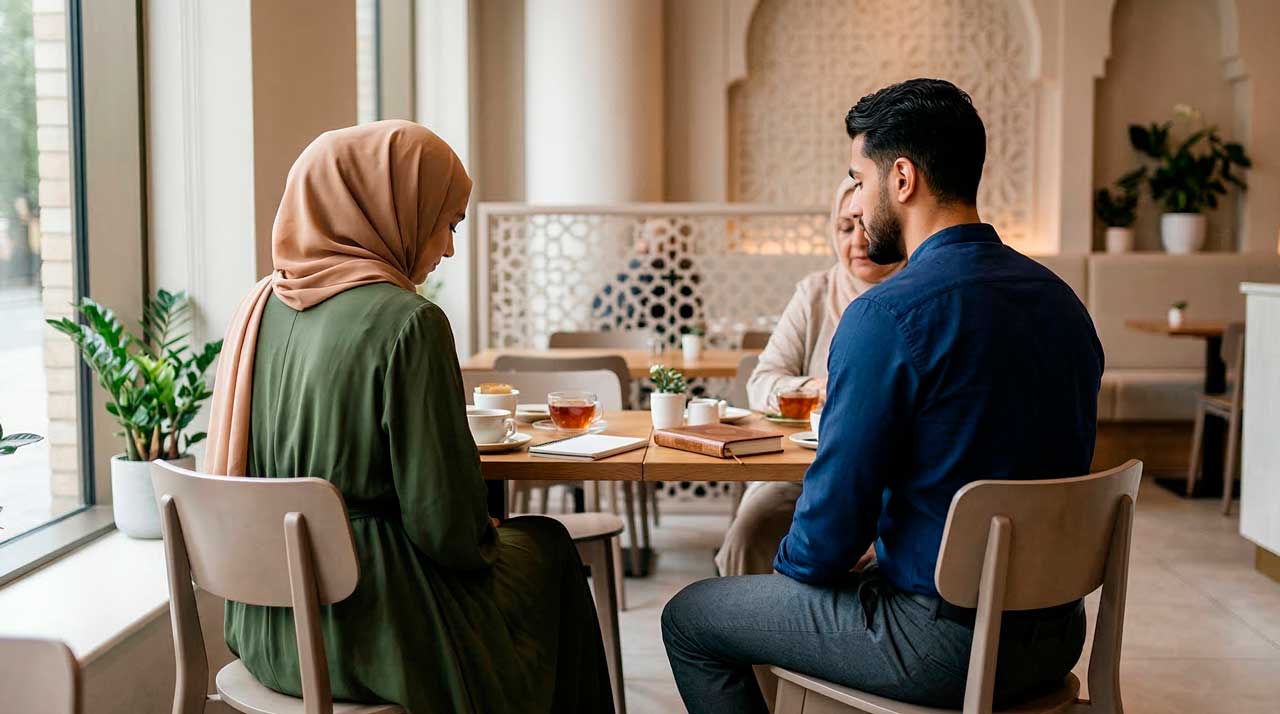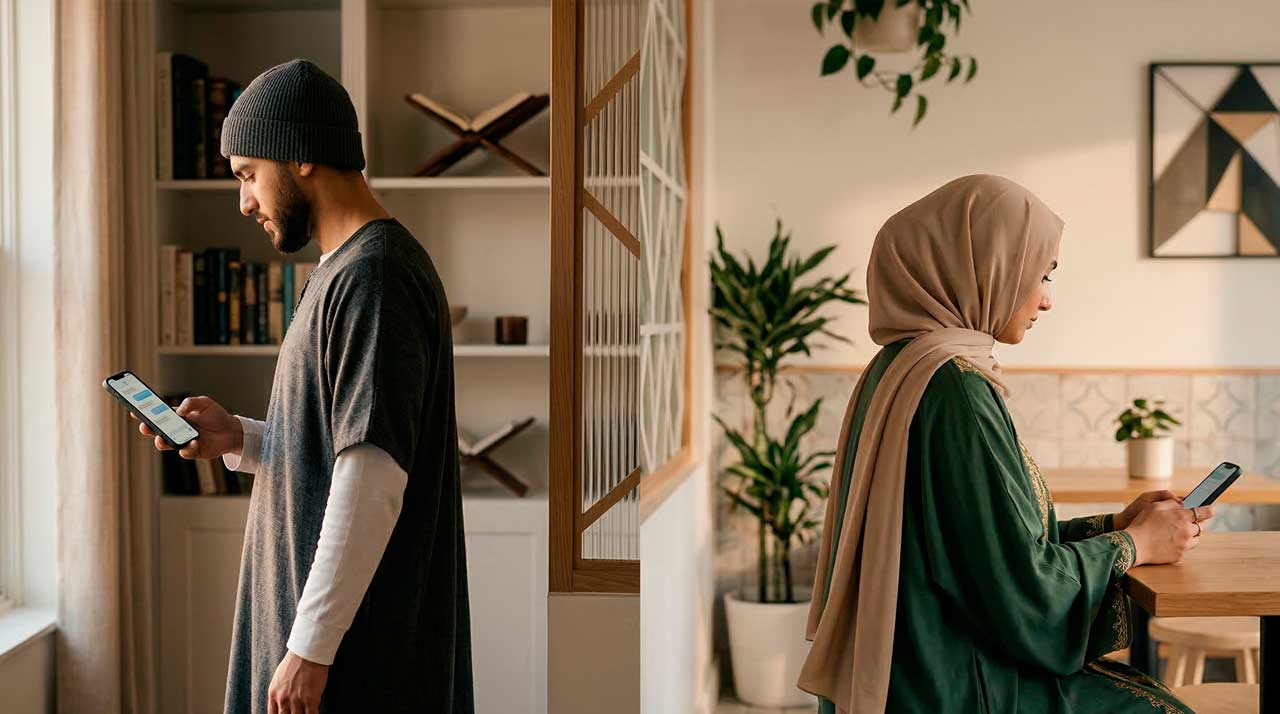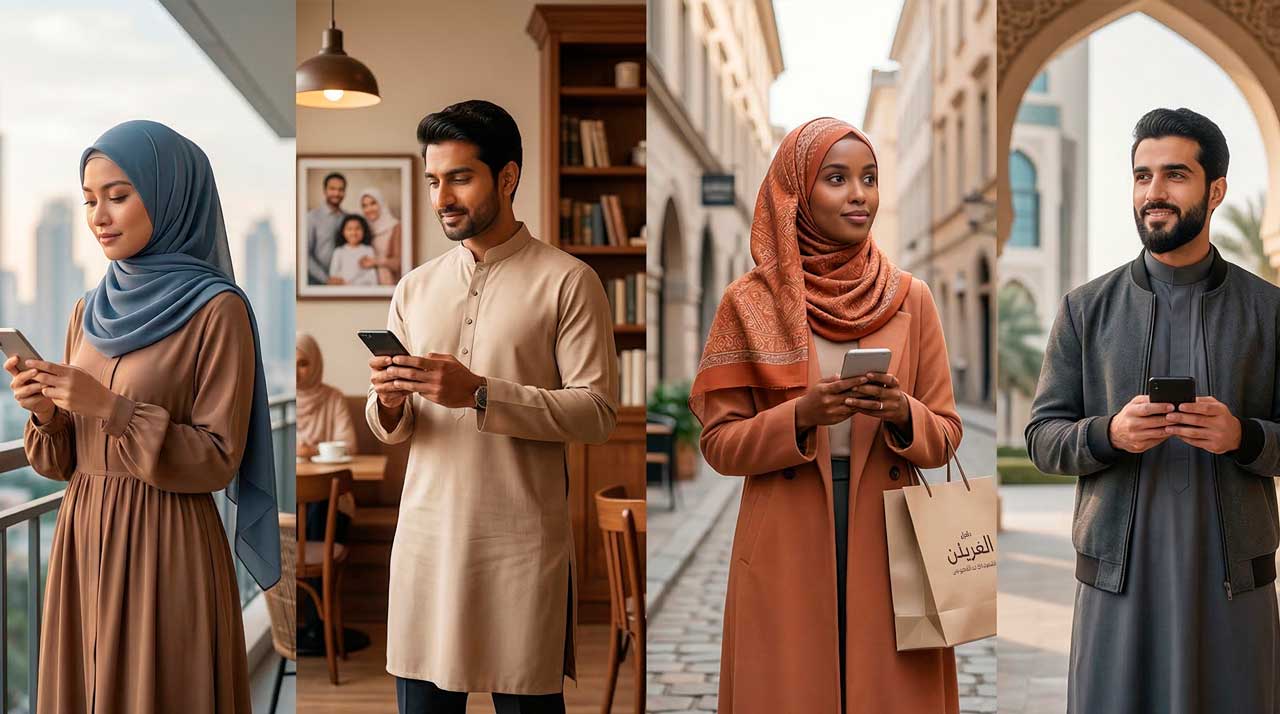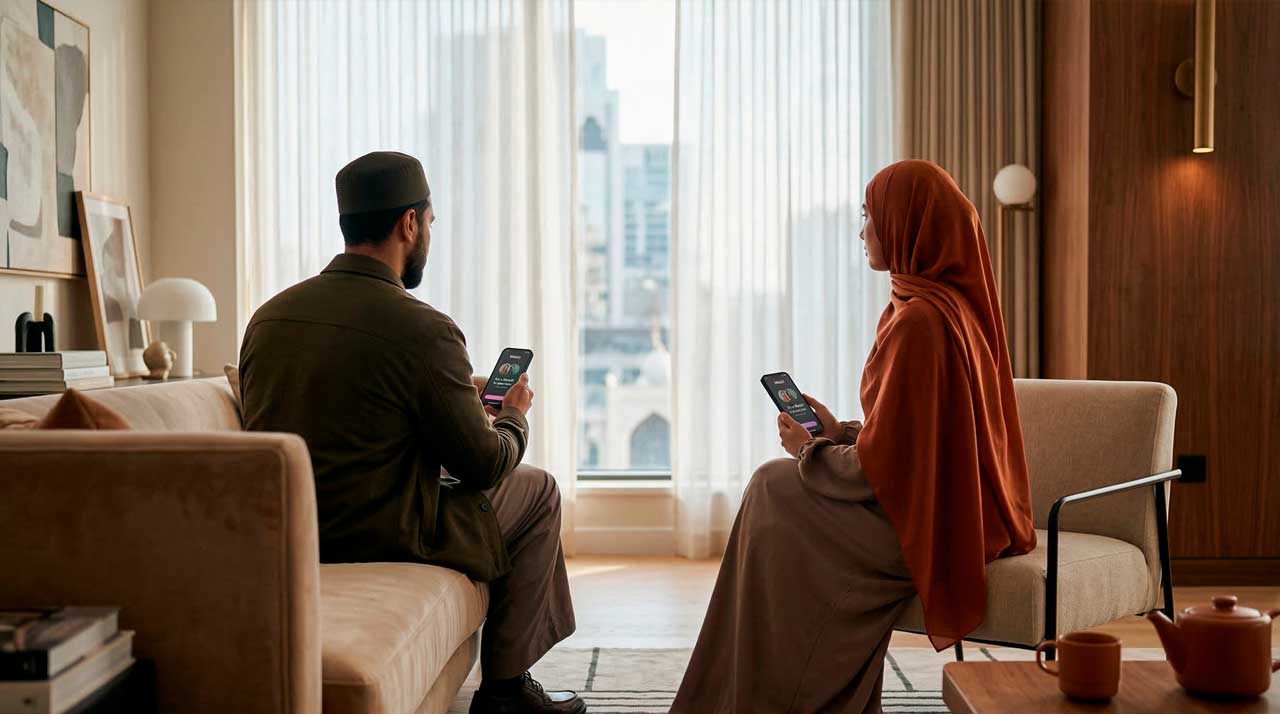
Marriage in Islam is not a single, uniform experience. It is a sacred covenant shaped by faith, yet lived out through the lens of culture, history, geography, and personal circumstance. A Pakistani Muslim woman raised in Birmingham navigates her path to marriage very differently from a Mexican revert in Houston, a widowed Arab professional in Dubai, or a Nigerian Muslim man seeking a second marriage after divorce. And yet, all of them are guided by the same Quranic principle:
“And of His signs is that He created for you from yourselves mates that you may find tranquility in them, and He placed between you affection and mercy” (Quran 30:21).
This guide exists because no single article currently addresses the full spectrum of Muslim identities and how they intersect with marriage. Most resources either focus narrowly on Islamic law, or speak only to one demographic — the South Asian diaspora, the convert community, or those seeking remarriage. The reality is that the Muslim world is extraordinarily diverse, and the search for a halal marriage looks different depending on who you are, where you come from, and where you are in your life’s journey.
Whether you identify as a practicing Muslim, a non-practicing Muslim, a revert, a born Muslim, a British Muslim, an American Muslim, a divorced Muslim, or a widowed Muslim seeking a second chance — this guide is written for you. It covers the Islamic foundations that unite all Muslims, the cultural realities that distinguish communities, and the practical wisdom that helps people build lasting, fulfilling marriages in the modern world.
The Nikah: What Islam Actually Requires (and What Culture Adds)
Before exploring how marriage differs across identities and cultures, it is essential to understand what Islam itself mandates — and what is simply cultural tradition. This distinction is not merely academic; it is the key to navigating the often-confusing space between religious obligation and inherited custom.
Islamic law identifies five essential elements for a valid nikah (marriage contract).
- First, there must be mutual consent from both the bride and groom — a right that cannot be overridden by family pressure or social expectation.
- Second, the mahr (a mandatory gift from the groom to the bride) must be agreed upon; it is a right belonging exclusively to the wife and symbolises her dignity and financial security.
- Third, the presence of a wali (guardian, typically the bride’s father or a male relative) is required in most schools of Islamic jurisprudence, though scholars differ on the conditions under which this applies.
- Fourth, the nikah requires at least two witnesses.
- Fifth, the marriage should be publicly announced — the Prophet Muhammad (peace be upon him) said, “Announce this marriage and beat the drums for it” [1].
Everything beyond these five elements — the elaborate multi-day celebrations, the specific dress codes, the dowry negotiations, the family approval rituals — belongs to the domain of culture and custom. Islam’s maxim that “custom carries legal weight” (al-‘aadah muhakkamah) means that cultural practices are respected when they do not contradict Islamic principles, but they are never obligatory in the religious sense [2]. This distinction liberates Muslim couples from the tyranny of cultural conformity while preserving the sacred structure of the nikah itself.
The Quran frames the diversity of Muslim marriage practices as a feature, not a bug:
“O mankind, indeed We have created you from male and female and made you peoples and tribes that you may know one another. Indeed, the most noble of you in the sight of Allah is the most righteous of you” (Quran 49:13).
Righteousness — not ethnicity, not social class, not cultural conformity — is the true measure of a suitable spouse.
The Prophet Muhammad (peace be upon him) reinforced this when he said: “A woman is married for four things: her wealth, her family status, her beauty, and her religion. So you should marry the religious woman (otherwise) you will be a loser” [3]. The primacy of deen (religious commitment) over all other criteria is the foundation upon which every Muslim marriage, regardless of cultural context, should be built.
Religious Identity and Marriage: Practicing, Non-Practicing, Revert, and Born Muslim
How Religious Status Shapes the Search for a Spouse
One of the most significant — and often underestimated — factors in Muslim marriage is the question of religious practice. The Muslim community encompasses a wide spectrum: from those who pray five times daily, fast every Ramadan, and structure their entire lives around Islamic principles, to those who identify culturally as Muslim but may not practise regularly. Neither category is monolithic, and both deserve honest, compassionate guidance.
For practising Muslims, compatibility in religious practice is typically a non-negotiable priority. This includes shared values around prayer, modesty, halal diet, and the role of Islamic principles in daily decision-making. The challenge for practising Muslims is often finding a partner whose level of commitment matches their own, particularly in Western contexts where the Muslim community is diverse and the pressure to compromise on religious standards can be significant.
For non-practising or culturally Muslim individuals, the marriage search involves a different kind of negotiation — often between family expectations rooted in Islamic tradition and personal lifestyles that may diverge from those traditions. This group frequently faces pressure from families who insist on an Islamic nikah even when the individual’s personal practice is limited, creating a tension between cultural identity and religious authenticity.
The most nuanced category, however, is the Muslim revert (also called a convert or new Muslim) — someone who has chosen Islam as an adult, often without the cultural and family infrastructure that born Muslims take for granted.
The Revert’s Journey: Marriage Challenges and How to Navigate Them
The experience of seeking marriage as a Muslim revert is unlike any other in the Muslim community. Reverts bring extraordinary gifts to a marriage — a conscious, chosen faith, often a deep spiritual sincerity, and a perspective unclouded by cultural baggage. Yet they also face challenges that born Muslims rarely encounter.
The most immediate challenge is the absence of a Muslim family network. In traditional Islamic marriage, the wali plays a central role. For a revert woman whose father is not Muslim, finding a suitable wali can be complex. Most scholars agree that an imam or a trustworthy Muslim man from the community can serve as a wali in such circumstances, but the process requires navigating unfamiliar institutional structures [4].
The second major challenge is cultural expectations from a partner’s family. Many Muslim families, particularly those from South Asian, Arab, or African backgrounds, have deeply ingrained cultural practices around marriage that they may conflate with Islamic obligation. A Pakistani family may expect a revert bride to adopt Urdu, wear specific traditional clothing, or participate in cultural ceremonies that have no Islamic basis. A revert who lacks the cultural literacy to distinguish between Islamic requirements and cultural preferences may feel overwhelmed or pressured to conform in ways that compromise her own identity [5].
The third challenge is the “new Muslim trap” — the well-documented phenomenon in which reverts, eager to practise their new faith fully, rush into marriage before they have had sufficient time to understand Islamic marriage rights, build community connections, or assess compatibility with a potential partner [6]. Scholars and counsellors consistently advise reverts to take at least one to two years to establish themselves in the Muslim community, seek Islamic education, and build relationships with trustworthy mentors before pursuing marriage.
For reverts seeking a spouse, the most important principle is to prioritise deen over culture. A partner who values your chosen faith and respects your journey as a revert is worth far more than one who comes from the “right” ethnic background but treats your revert status as a deficit. Many reverts find their most compatible matches within the broader revert community or among born Muslims who are themselves committed to Islamic principles over cultural conformity.
| Identity | Key Marriage Challenges | Recommended Approach |
|---|---|---|
| Practising born Muslim | Finding equally committed partner; family pressure on ethnicity | Prioritise deen compatibility; communicate clearly with family |
| Non-practising Muslim | Balancing cultural identity with personal lifestyle | Honest self-assessment; transparent communication with partner |
| Muslim revert/convert | No Muslim family network; cultural pressure from partner’s family | Seek community wali; distinguish culture from religion |
| New Muslim (< 2 years) | Risk of rushing into marriage; limited community knowledge | Build community first; seek mentorship before marriage |
Marital History and Remarriage: A Complete Guide to Muslim Second Marriage
What Islam Says About Divorce and Remarriage
Islam approaches divorce with a combination of pragmatism and compassion. Unlike some religious traditions that treat divorce as a moral failure, Islam acknowledges that marriages can break down and provides clear, dignified pathways for dissolution and remarriage. The Quran states:
“Divorce is twice. Then, either keep [her] in an acceptable manner or release [her] with good treatment” (Quran 2:229).
Remarriage after divorce is not merely permitted — it is, in many circumstances, actively encouraged as a path to healing, companionship, and fulfilment.
The concept of iddah (waiting period) is central to Islamic remarriage law. For a divorced woman, the iddah is three menstrual cycles (approximately three months), during which she may not remarry. This period serves multiple purposes: it ensures that any pregnancy from the previous marriage is identified, it provides time for potential reconciliation, and it allows the woman to process the emotional transition before entering a new commitment. For a widowed woman, the iddah is four months and ten days [7].
For men, there is no iddah requirement after divorce, though Islamic scholars and counsellors strongly advise a period of reflection and emotional healing before pursuing a new marriage. The absence of a mandatory waiting period for men does not mean that rushing into remarriage is wise or spiritually sound.
For Divorced Muslims: Healing, Readiness, and Finding the Right Partner
Divorce carries a significant social stigma in many Muslim communities, particularly for women, despite the fact that Islam explicitly permits it and the Prophet Muhammad (peace be upon him) himself was married to women who had been previously married. Addressing this stigma honestly is essential for any divorced Muslim navigating the remarriage process.
Emotional readiness is the first and most important consideration. Divorce, even when necessary and correct, involves grief — for the relationship, for the shared life, and sometimes for the version of oneself that existed within that marriage. Rushing into a new marriage without adequate healing often results in repeating the same patterns or bringing unresolved wounds into a new relationship. Islamic counsellors typically recommend a minimum of one year of personal reflection, therapy if needed, and community support before actively seeking a new spouse.
When a divorced Muslim does begin the search for a new partner, transparency is both an Islamic obligation and a practical necessity. Concealing a previous marriage is not only dishonest but often counterproductive — it creates a foundation of mistrust that can undermine even a promising relationship. Islam’s emphasis on honesty (sidq) in all dealings applies with particular force to the marriage process.
For divorced Muslims with children, the question of blended families requires careful consideration. Islamic law is clear that children from a previous marriage retain their rights of maintenance, custody, and inheritance regardless of a parent’s remarriage. A new spouse must understand and accept these obligations from the outset. The Prophet Muhammad (peace be upon him) praised those who care for stepchildren with kindness and equity, and Islamic scholars have written extensively on the rights of children in blended family contexts [8].
For Widowed Muslims: Honouring the Past While Building a Future
The experience of widowhood is among the most profound forms of loss a person can face, and the Muslim community’s approach to widowed remarriage reflects a deep understanding of this reality. The Prophet Muhammad (peace be upon him) himself married several widows, and his first wife Khadijah (may Allah be pleased with her) was a widow when they married — a fact that carries enormous significance as a model for the Muslim community.
The four-month-and-ten-day iddah for widows is not merely a legal formality; it is a period of mourning, reflection, and spiritual recalibration. During this time, a widow is not expected to entertain proposals or engage in the marriage search. After the iddah concludes, however, remarriage is not only permitted but often encouraged — particularly for younger widows with children who need a stable family environment.
The emotional complexity of widowed remarriage is distinct from divorced remarriage. A widow may feel that seeking a new partner represents a betrayal of her late husband’s memory, or she may face family pressure to remain unmarried out of a misplaced sense of loyalty. Islamic scholars are unanimous that these cultural pressures have no basis in the religion, and that a widow who remarries with good intentions honours both her late husband’s legacy and her own right to companionship and fulfilment [9].
Where You Are From Shapes How You Marry: A Guide for Muslim Diaspora Communities
The Diaspora Reality: Faith, Culture, and Identity in Tension
For the estimated 50 million Muslims living in Western countries — including approximately 3.9 million in the United Kingdom, 3.5 million in the United States, and 1.8 million in Canada — the marriage search involves navigating a uniquely complex set of pressures [10]. Diaspora Muslims must simultaneously honour their family’s cultural traditions, fulfil their Islamic obligations, and function within the legal and social frameworks of their country of residence. This triple negotiation is one of the defining challenges of Muslim life in the West.
The following regional profiles are generalisations, and individual experiences vary enormously within each community. They are offered not as definitive descriptions but as starting points for understanding the cultural contexts that shape marriage expectations across different Muslim communities.
British Muslims: Balancing South Asian Traditions, Islamic Values, and British Life
The British Muslim community is predominantly of South Asian heritage — Pakistani, Bangladeshi, and Indian — though it also includes significant Arab, Somali, and Turkish communities, as well as a growing number of white British and Afro-Caribbean reverts. This diversity means that “British Muslim marriage” encompasses an enormous range of practices and expectations.
For British Muslims of South Asian heritage, the marriage process often involves a complex negotiation between the biraderi (kinship network) system, which traditionally prioritises cousin marriages and community endogamy, and the Islamic principle that any Muslim of good character is a suitable spouse. Research has consistently shown that younger British Muslims are increasingly rejecting cousin marriage and ethnic endogamy in favour of broader compatibility criteria, though family pressure remains significant [11].
A critical legal consideration for British Muslims is the distinction between the Islamic nikah and the civil marriage registration required under UK law. A nikah conducted without civil registration has no legal standing in England and Wales, meaning that a woman married only through nikah has no legal rights to maintenance, inheritance, or property division in the event of divorce or death. The Muslim Marriage Campaign and various Islamic organisations have long advocated for greater awareness of this issue, and many imams now refuse to conduct a nikah without evidence of civil registration [12].
American Muslims: Diversity, Dating Apps, and Halal Relationships
The American Muslim community is among the most ethnically diverse Muslim populations in the world, comprising Arab Americans, South Asian Americans, African American Muslims (who constitute approximately 20% of the US Muslim population), and a rapidly growing convert community. This diversity creates both richness and complexity in the marriage search.
American Muslims have been at the forefront of developing halal alternatives to mainstream dating culture. Apps such as Salams (formerly Minder), NikahPlus, and Hawaya have attracted millions of users seeking marriage-oriented connections within Islamic guidelines. These platforms allow users to filter by religious practice, ethnicity, marital history, and geographic location — directly reflecting the semantic categories that define how Muslims search for partners online.
The African American Muslim community deserves particular attention in any discussion of American Muslim marriage. Many African American Muslims are reverts or come from families with a history of conversion, and their experience of the marriage search is often distinct from that of immigrant Muslim communities. Issues of cultural compatibility, family acceptance, and community belonging take on specific dimensions in this context that are not always addressed in mainstream Muslim marriage guidance [13].
Canadian Muslims: Multicultural Marriage in a Pluralist Society
Canada’s Muslim population of approximately 1.8 million benefits from a legal and cultural framework that actively celebrates multiculturalism, yet Canadian Muslims face many of the same challenges as their British and American counterparts. The concentration of Muslim communities in cities like Toronto, Montreal, and Vancouver creates vibrant community networks but can also intensify the pressure to marry within specific ethnic or sectarian groups.
Canadian Muslims also navigate the intersection of provincial family law and Islamic marriage requirements. As in the UK, a nikah without civil registration provides no legal protection under Canadian law, and awareness of this issue has grown significantly in recent years.
Arab Muslim Marriage: Family, Honour, and the Mahr
In Arab Muslim communities — whether in the Middle East, North Africa, or the Arab diaspora — family involvement in marriage is typically extensive and deeply valued. The concept of karama (dignity and honour) shapes marriage negotiations, with both families seeking to ensure that the union reflects well on their social standing. Mahr amounts in Arab communities can be substantial, reflecting the cultural value placed on the bride’s worth and the groom’s ability to provide.
The role of the wali is particularly pronounced in many Arab communities, where a father’s blessing is considered essential not merely as a legal formality but as a genuine expression of family unity. At the same time, younger Arab Muslims — particularly those in diaspora contexts — are increasingly asserting their right to choose their own partners, creating generational tensions that require careful navigation.
South Asian Muslim Marriage: Pakistani, Indian, and Bangladeshi Traditions
South Asian Muslim marriage traditions are among the most elaborate and culturally rich in the Muslim world. Multi-day wedding celebrations, intricate henna ceremonies, and extensive family negotiations are common features of Pakistani, Indian, and Bangladeshi Muslim weddings. These traditions carry genuine cultural beauty and social significance, but they can also create significant financial pressure and, in some cases, obscure the Islamic requirements of the nikah itself.
The practice of rishta (the formal proposal and matchmaking process) remains central to South Asian Muslim marriage culture. Families present potential matches through community networks, and the process involves multiple meetings, family consultations, and often extended negotiations. While the rishta system has been criticised for prioritising family preferences over individual compatibility, it also provides a structured, community-supported pathway to marriage that many young South Asian Muslims value.
For South Asian Muslims in the diaspora — whether in the UK, USA, Canada, or the Gulf — the rishta system has adapted to digital platforms, with matrimonial websites and apps allowing families to search for matches across geographic boundaries. The term NRI Muslim (Non-Resident Indian Muslim) has become a specific search category, reflecting the significant population of Indian Muslims living abroad who seek partners from their home communities.
Turkish Muslim Marriage: Secular Law and Religious Practice
Turkey presents a unique case in the Muslim world: a constitutionally secular state with a predominantly Muslim population. Turkish marriage law is entirely civil, and the nikah has no legal standing without civil registration. Many Turkish Muslims conduct both a civil ceremony and a religious nikah, but the legal primacy of civil marriage is firmly established.
Turkish Muslim marriage culture has been significantly shaped by the country’s history of secular nationalism, resulting in practices that differ markedly from Arab or South Asian traditions. Family involvement is important but typically less extensive, and individual choice in partner selection is more widely accepted. For Turkish Muslims in the diaspora — particularly in Germany, the Netherlands, and Belgium — navigating between Turkish cultural expectations, Islamic principles, and the legal frameworks of their countries of residence creates a distinctive set of challenges.
African Muslim Marriage: Diversity Across a Continent
The African Muslim community encompasses an extraordinary range of cultures, from the Sahel to East Africa, from West African Sufi traditions to Somali clan-based marriage customs. Any generalisation about “African Muslim marriage” risks obscuring this diversity, but some common themes emerge.
Community solidarity is a defining feature of Muslim marriage celebrations across much of sub-Saharan Africa, with weddings serving as major social events that strengthen community bonds. The role of elders in guiding and blessing the marriage process is widely valued. In many African Muslim communities, the mahr is modest by Middle Eastern standards but carries deep symbolic significance.
For African Muslims in the diaspora — including significant communities in the UK, France, and North America — the challenge of maintaining cultural traditions while adapting to new social contexts is particularly acute. The Somali Muslim community in the UK and USA, for example, has developed distinctive approaches to marriage that blend traditional clan considerations with Islamic principles and Western legal requirements.
| Community | Key Cultural Features | Diaspora Challenges |
|---|---|---|
| British South Asian Muslim | Biraderi system, rishta process, multi-day celebrations | Cousin marriage pressure, nikah vs. civil registration |
| American Muslim (diverse) | Ethnic diversity, dating apps, African American convert tradition | Cultural fragmentation, family acceptance of mixed marriages |
| Arab Muslim | Extensive family involvement, substantial mahr, honour culture | Generational tension over partner choice |
| South Asian Muslim | Elaborate weddings, rishta system, NRI considerations | Financial pressure, cultural vs. Islamic requirements |
| Turkish Muslim | Secular legal framework, civil marriage primacy | Balancing secular law and religious practice |
| African Muslim | Community solidarity, elder guidance, modest mahr | Maintaining traditions in diaspora context |
Crossing Borders: How to Build a Successful Intercultural Muslim Marriage
Intercultural Muslim marriage — unions between Muslims from different ethnic, national, or cultural backgrounds — is increasingly common, particularly in Western diaspora contexts. These marriages carry unique gifts and unique challenges, and understanding both is essential for couples who are considering or already navigating this path.
The gifts of intercultural marriage are real and significant. Children of intercultural couples often develop exceptional cultural intelligence, linguistic flexibility, and a broad sense of belonging within the global Muslim community. The Quranic verse on diversity (49:13) is not merely a platitude — it reflects a genuine Islamic vision of the Ummah as a community enriched by its differences.
The challenges, however, require honest acknowledgement. Research consistently shows that intercultural couples face higher rates of conflict around issues of food, language, family expectations, parenting styles, and gender roles [14]. These conflicts are not insurmountable, but they require proactive, compassionate communication — ideally before the marriage, not after.
The most effective strategy for intercultural Muslim couples is to establish Islam as the primary shared framework for decision-making. When a Pakistani husband and a Mexican revert wife disagree about whether to celebrate a cultural holiday, the question to ask is not “whose culture wins?” but “what does Islam say, and how can we honour both of our backgrounds within Islamic principles?” This approach transforms cultural difference from a source of conflict into a source of richness.
Pre-marital counselling is strongly recommended for intercultural couples, and many Islamic centres in Western countries now offer culturally sensitive pre-marital education programmes. These programmes address communication skills, conflict resolution, financial planning, and the specific challenges of intercultural family life — all within an Islamic framework.
Finding Your Match: Halal Dating Rules for the Digital Age
The question of how Muslims can find a spouse in a manner consistent with Islamic principles has become more complex — and more urgent — in the digital age. Traditional community-based matchmaking, while still valuable, is no longer sufficient for many Muslims, particularly those in diaspora contexts or those who have moved away from their home communities.
Halal dating — a term that would have seemed contradictory to earlier generations of Muslims — has emerged as a practical framework for marriage-oriented interaction between Muslim singles. The key distinction between halal dating and conventional Western dating is intentionality: halal dating is explicitly oriented toward marriage, not casual romance or physical gratification.
The practical rules of halal dating are grounded in Islamic principles. Interactions should be purposeful and marriage-oriented from the outset. Meetings should take place in public settings or with a third party present, whether a family member, a trusted friend, or a digital chaperone in the case of video calls. Physical intimacy before marriage is prohibited. Conversations should focus on compatibility — values, life goals, family expectations, religious practice — rather than romantic fantasy.
Muslim dating apps have become a significant part of the marriage search for millions of Muslims worldwide. Platforms such as Salams, NikahPlus, and Muzz have attracted millions of users and have facilitated thousands of successful marriages. When choosing a Muslim dating app, users should look for platforms that require clear statement of marital intentions, allow filtering by religious practice and marital history, provide privacy controls that respect Islamic modesty norms, and have robust verification processes to protect against deception.
The question of whether Muslim dating apps are halal is one that scholars have addressed with increasing nuance. The consensus among contemporary Islamic scholars is that these platforms are permissible tools when used with the correct intention (seeking marriage), within appropriate boundaries (no inappropriate conversations or images), and with family involvement where possible [15]. The tool itself is neutral; it is the manner of use that determines its permissibility.
Before You Say Yes: The Essential Pre-Marriage Checklist for Muslim Couples
The period of getting to know a potential spouse — whether through a rishta process, a dating app, or community introduction — is one of the most important investments a Muslim can make. The following questions and considerations are not exhaustive, but they represent the areas most commonly identified by Islamic counsellors and married Muslims as critical for pre-marriage discussion.
Religious Compatibility is the foundation. How does each person practise their faith? What are their expectations around prayer, fasting, halal food, and Islamic education for children? Are there differences in religious practice that both parties can accept and respect?
Family Dynamics require explicit discussion. What role will each family play in the marriage? How will decisions be made when family preferences conflict with the couple’s own choices? For intercultural couples, how will cultural traditions from both backgrounds be honoured?
Financial Transparency is an Islamic obligation as well as a practical necessity. What are each person’s financial circumstances, debts, and expectations around earning and spending? What is the agreed mahr, and has it been discussed honestly? Who will manage household finances, and how will major financial decisions be made?
Life Goals and Lifestyle compatibility matters enormously. Where will the couple live? What are their career ambitions? Do they want children, and if so, how many and when? How do they envision their daily life together?
Previous Relationships must be disclosed honestly. For divorced or widowed Muslims, transparency about the previous marriage — including children, ongoing obligations, and emotional readiness — is both an Islamic obligation and a foundation of trust.
The Prophet Muhammad (peace be upon him) encouraged Muslims to look carefully at a potential spouse before committing: “When one of you proposes to a woman, if he is able to look at what will encourage him to marry her, let him do so” [16]. This hadith is often cited to support the permissibility of meeting and observing a potential spouse before making a decision — a principle that applies equally in the digital age.
Frequently Asked Questions
Yes, absolutely. There is no Islamic prohibition on marriage between a revert and a born Muslim. The Prophet Muhammad (peace be upon him) said that a person is to be chosen for marriage based on their deen (religious commitment), character, and compatibility — not their birth status. Many reverts find that born Muslims who are themselves committed to Islamic principles over cultural conformity make excellent partners.
Yes. Islam explicitly permits and even encourages remarriage for divorced and widowed women. After completing the iddah (waiting period), a Muslim woman is fully entitled to remarry. The Prophet Muhammad (peace be upon him) himself married several previously married women, and Islamic scholars are unanimous that there is no spiritual or moral stigma attached to a woman's second marriage.
The iddah for a divorced Muslim woman is three menstrual cycles (approximately three months). During this period, she may not remarry, and her former husband is obligated to provide for her maintenance. If she is pregnant at the time of divorce, the iddah extends until the birth of the child. For a widowed woman, the iddah is four months and ten days.
In England and Wales, a nikah conducted without civil registration has no legal standing. British Muslims are strongly advised to ensure that their marriage is registered under civil law, either by conducting the nikah in a registered venue with a registered officiant, or by completing a civil ceremony separately. Many Islamic organisations and imams now require evidence of civil registration before conducting a nikah.
A reputable Muslim dating app should require users to state their intention to marry, allow filtering by religious practice, ethnicity, and marital history, provide robust privacy controls, have a verification process to reduce deception, and be transparent about how user data is handled. Platforms that allow or encourage inappropriate content or interactions are not suitable for Muslims seeking halal relationships.
The most effective approach is to establish Islam as the primary shared framework for decision-making, rather than privileging either partner's cultural background. Pre-marital counselling with a culturally sensitive Islamic counsellor is strongly recommended. Explicit, compassionate conversations about family expectations, cultural traditions, and how differences will be navigated should take place before the marriage, not after.
Conclusion
Muslim marriage, in all its diversity, is ultimately a single act of worship — a commitment made before Allah to build a life of mawaddah (love) and rahmah (mercy) with another human being. The extraordinary variety of forms this commitment takes across cultures, geographies, and life circumstances is not a source of confusion but of richness. It reflects the Quranic vision of a global Ummah united in faith and enriched by difference.
Whether you are a revert navigating your first marriage without a Muslim family network, a British Pakistani woman negotiating between biraderi expectations and your own sense of compatibility, a divorced Muslim rebuilding after heartbreak, or a widowed Muslim finding the courage to love again — you are not alone. The Islamic tradition has resources, guidance, and precedent for every one of these situations. The key is to approach the marriage search with clarity about what Islam requires, honesty about your own circumstances and needs, and the courage to prioritise deen over cultural pressure.
The best marriage is not the one that looks most impressive at the wedding. It is the one that, year after year, brings you closer to Allah and to the person you chose to walk through life with. May Allah grant every Muslim reading this guide a spouse who is the comfort of their eyes and a partner in their journey toward Him.
References
This article was written for educational and informational purposes. For specific Islamic legal rulings (fatawa) relevant to your personal situation, please consult a qualified Islamic scholar.
- Hadith reported by Ahmad and al-Tirmidhi. See: Sunan al-Tirmidhi, Hadith 1089. ↑
- Al-Suyuti, Al-Ashbah wa al-Naza’ir, on the legal maxim al-‘aadah muhakkamah. See also: Yaqeen Institute, “Marriage and Gender Roles in Islam: Beyond Rights and Duties,” https://yaqeeninstitute.org/ ↑
- Sahih al-Bukhari, Hadith 5090; Sahih Muslim, Hadith 1466. ↑
- Islamic Fiqh Academy rulings on the wali for revert women. See: Islamwich, “How to Build a Successful Intercultural Marriage,” https://islamwich.com/ ↑
- Tuesday in Love, “The Challenges of Marriage as a Muslim Revert,” https://www.tuesdayinlove.com/ ↑
- AllahCentric, “The New Muslim Trap: Why Converts Must Exercise Caution in Marriage,” https://allahcentric.wordpress.com/ ↑
- Quran 2:228 (iddah for divorced women); Quran 2:234 (iddah for widows). See: Muslim Online Marriage, “Second Marriage: Meaning, Guidance & Matchmaking,” https://muslimonlinemarriage.com/ ↑
- Nest Matrimony, “Muslim Matrimony: A Guide to Second Marriage,” https://nestmatrimony.com/ ↑
- QArabic, “Rules of Second Marriage in Islam,” https://qarabic.com/ ↑
- Pew Research Center, “The Global Religious Landscape” and “Muslims in Europe.” See also: MarryMax, “Second Marriage Services for Muslims in the West,” https://marrymax.com/ ↑
- Muslim Marriage Global, “Cultural Differences in Muslim Marriage Across Countries,” https://blog.muslimmarriage.global/ ↑
- The Muslim Marriage Campaign (UK). See also: Swarthmore College, “A Complete Guide for Cultural Sensitivity in Muslim Marriage Proposals,” https://ds-exhibits.swarthmore.edu/ ↑
- Sound Vision, “Navigating Intercultural Marriage and Child-Rearing,” https://www.soundvision.com/ ↑
- Hadith of the Day, “Intercultural & Interfaith Marriages,” https://hadithoftheday.com/ ↑
- Salams App, “8 Muslim Dating Rules and Traditions You Need to Know,” https://www.salams.app/ ↑
- Sunan Abu Dawud, Hadith 2082; authenticated by al-Albani. ↑